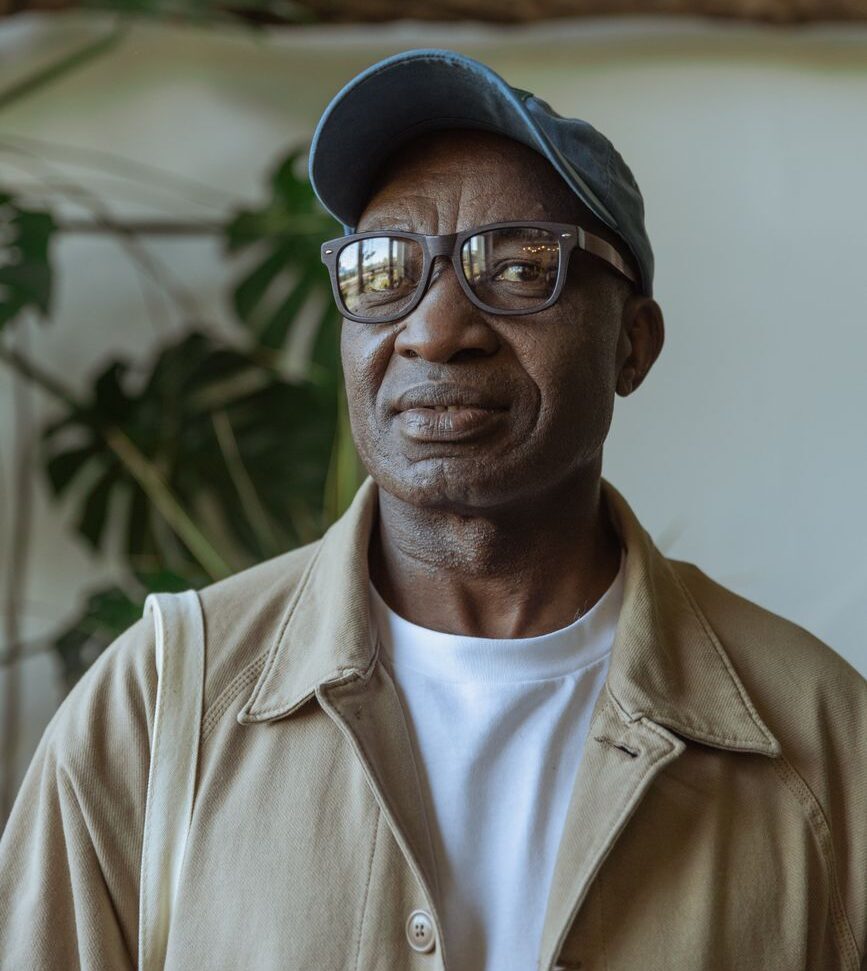
Starting T at Sixty-Two
By Harold
The first person to notice my voice changing was my sister.
“You getting a cold?” she asked.
I was standing in my kitchen in Cleveland, holding the phone in one hand and a piece of toast in the other. I hadn’t noticed anything different that morning. I’d fed the cat, opened the blinds, and complained about somebody parking across the sidewalk.
“No,” I said.
Then I heard it.
Not a whole new voice. Just something lower underneath the one I recognized.
My sister went quiet for a second.
“Oh,” she said. “Okay.”
After we hung up, I called my voicemail so I could hear myself again.
I’m Harold. I’m 62, Black, a retired postal worker, and a trans man. I started testosterone this year.
I still say that last sentence carefully. Not because I’m unsure. Because for a long time, I didn’t think it would ever be mine to say.
A Life That Looked Settled
From the outside, my life probably looked settled.
I worked. I paid bills. I remembered birthdays. I showed up when somebody needed a ride or help carrying a dresser down the stairs. I spent years delivering other people’s letters and packages, learning who wanted a quick hello and who could keep you talking long enough to throw off your afternoon.
I liked being useful. I liked having somewhere to be.
There was comfort in routine, too. If I kept moving, I didn’t have to examine everything I was carrying.
People sometimes ask whether I always knew I was a man.
I knew something. I just didn’t always have the words, or the nerve, or a picture of what my life could look like if I said it out loud.
When I was younger, I understood that certain feelings were best kept private. You could dress a particular way, avoid certain conversations, make yourself dependable enough that people stopped asking questions.
That was how I managed.
It wasn’t all misery. I had friendships, good meals, music, ordinary happy days. I don’t want to erase my whole life just because I wasn’t living it as openly as I do now.
But there was always an adjustment I was making. A small movement away from myself to keep everybody else comfortable.
After enough years, that movement starts to feel like standing still.
Retirement Got Quiet
Retirement gave me time I hadn’t planned for.
At first, I enjoyed it. No alarm. No rushing out the door. I could finish my coffee while it was still hot.
Then the quiet started asking questions.
Who was I when I wasn’t working? What did I actually want? How much of my life had I arranged around not upsetting anybody?
I began watching videos of trans men talking about their lives. Some were young enough to be my grandchildren. I was glad for them, but I also found myself looking for older faces.
I wanted to see somebody with gray hair. Somebody who had already lived a whole complicated life before beginning again.
Eventually, I stopped looking only for permission in other people’s stories.
I made an appointment.
I wrote down my questions beforehand because I knew I might forget them once I was sitting in the room. I wanted to understand what starting testosterone could mean for me, what my health needed, and what I should expect without turning anybody else’s experience into a promise.
I also wrote one question I never asked aloud:
Am I ridiculous for wanting this now?
Nobody at that appointment treated me like I was.
That helped.
Saying It to My Family
Coming out at my age means people have decades of practice knowing you another way.
They have photographs. Stories. A name they’ve said without thinking for years.
When I told my sister, she asked why I hadn’t told her sooner.
I didn’t know how to answer.
“Sooner” sounds simple when you’re standing on the other side of it. It leaves out all the times I almost said something. All the times I decided the family already had enough going on. All the times I convinced myself that wanting more was selfish.
“I’m telling you now,” I said.
She nodded.
Some people have been easier than I expected. Others keep reminding me how long they’ve known me, as though I could have forgotten.
I try to be patient. But I’m learning that patience doesn’t require me to agree that their adjustment is more important than my life.
I’ve already done a lot of waiting.
Hearing Myself
My voice didn’t change in one dramatic moment.
At first, I kept wondering whether I was imagining it. I would say something while washing dishes and then repeat it, listening. Once, my voice cracked halfway through asking a cashier for a bag, and I laughed so hard she smiled without knowing why.
Some mornings, I record the same sentence on my phone.
“My name is Harold.”
There are recordings where I sound hesitant. Others where I’m trying too hard to sound natural. In one, the cat knocks something off the table before I get to my name.
I keep that one, too.
I’m not collecting evidence that I’ve become a man. I was a man before I started testosterone. These recordings are something more personal: a way to notice a change I spent years believing I would never get to experience.
The other day, I listened to an early recording and then a recent one.
I sat there for a while afterward.
At 62, you get used to talking about your body in terms of what needs attention. A knee. Your back. Something the doctor wants to keep an eye on.
It surprised me to have a change I wanted to listen to again.
The Years I Don’t Get Back
There is grief in this.
I can be happy now and still wish I’d had the chance sooner.
Sometimes I think about my younger self getting dressed for work, putting on a dependable face, heading out before sunrise. I wish I could stand beside him for a minute and tell him he isn’t confused or foolish.
I wish I could tell him he won’t spend every year hiding.
But I can’t give myself back forty years by being angry at sixty-two.
I can let myself grieve them. I can talk about them with people who understand. And then I can make dinner, answer the phone, take care of the life that’s actually here.
Being Black is part of this story, too. I spent a long time trying to appear respectable, capable, and beyond question. I learned to think carefully about how people might read me.
Transition hasn’t made those calculations disappear. It has made me less willing to let them make every decision.
What Comes Next
I don’t have a grand plan for becoming somebody new.
I want to be Harold at the grocery store. Harold on the phone. Harold when an old friend introduces me to someone.
I want to stop rehearsing explanations before ordinary conversations.
And I want to enjoy this without acting like I have to apologize for taking so long.
Last week, my sister called while I was making coffee.
She didn’t ask whether I was sick.
We talked about her neighbor, a family birthday, and whether I was coming over Sunday. Toward the end, she said my name.
“Harold, don’t forget.”
“I won’t,” I told her.
My voice came out lower than I expected.
This time, I didn’t repeat the words or reach for the recorder.
I just kept talking.
This story is a work of fiction inspired by real experiences. Its characters, dialogue, and events have been fictionalized and should not be read as a factual account of any individual’s life.