Can topical DHT or a vacuum pump increase FTM bottom growth? These options come up frequently in conversations about testosterone, genital dysphoria, and preparation for metoidioplasty. The information can be confusing: biological explanations, surgical protocols, product advertising, and personal experiences often get presented as if they provide the same level of evidence.
This guide looks at what the research supports, what remains uncertain, and the risks worth understanding before trying either approach. It is written for trans men, transmasculine people, and nonbinary people. Anatomical terms identify the tissue being discussed; use the language that feels right for your own body.
For an introduction to anatomy, measurements, and everyday care, start with our comprehensive guide to FTM bottom growth.
What Is DHT, and Why Is It Discussed for Bottom Growth?
Dihydrotestosterone, usually shortened to DHT, is an androgen made from testosterone through the action of an enzyme called 5-alpha-reductase. It binds strongly to androgen receptors and helps regulate androgen-sensitive tissues. [10]
That biology explains the interest in applying it to genital tissue. However, a hormone’s role in development does not establish that adding more of it to an adult’s existing testosterone treatment will produce extra growth.
Topical DHT and topical testosterone are different medications. A product’s active hormone, concentration, and gel or cream base all matter. “Growth cream” is not a specific medical formulation.
Topical DHT: What Do the Studies Actually Show?
The “2 cm of additional growth” claim needs context
The 2021 review by Grimstad and colleagues discusses androgen-related genital development and testosterone treatment in transmasculine patients. Its abstract mentions up to 2 cm of additional growth in connection with exogenous testosterone. It does not establish a further 2 cm from DHT cream. The full review explicitly identifies a lack of studies evaluating topical DHT’s effect on clitorophallus size in transmasculine people at that time. [1]
Published surgical protocols do include DHT and pumping
A 2021 report describing 813 metoidioplasty cases documents the use of topical DHT and vacuum devices before surgery. Patients also had prior hormone treatment, and the study focused on surgical outcomes. [3]
Interpretation: this is evidence of clinical use within a combined treatment pathway. It is not a controlled comparison isolating DHT from pumping or testosterone, and it cannot tell an individual how much extra growth to expect from either method alone.
The research gap remains important
A 2024 commentary in the British Journal of Clinical Pharmacology calls for research on genital hormone application, including its local effects and absorption into the bloodstream. It does not establish an effective DHT regimen for bottom growth. [2]
The practical conclusion is uncertainty about benefit, rather than a reliable prediction of extra length. A clinician considering this approach should explain that uncertainty alongside the potential risks.
DHT Side Effects and Formulation Concerns
“Topical” describes how a medication is applied. It does not guarantee that its effects stay at the application site.
Great Ormond Street Hospital’s information about DHT gel lists skin irritation, oily skin or acne, extra hair growth, and mood changes among possible effects. That leaflet concerns specialist pediatric use; it is useful medication information, not a study estimating risks for adults applying DHT to genital tissue. [4]
- Irritation: sensitive genital tissue may react to the medication or its base.
- Effects beyond the genitals: discuss which androgen-related changes would be welcome and which would be unwanted.
- Transfer to another person: hormone gel can transfer through skin contact. Follow the dispensing instructions about washing, covering, and contact precautions. [4]
- Scalp hair loss: DHT contributes to androgenetic alopecia in susceptible people. It should not be presented as a treatment for that condition. [10]
What if you take finasteride?
Finasteride reduces conversion of testosterone into DHT. A small 2025 case series involving three trans men reported improved scalp hair loss; two participants resumed menstruation. It did not establish how finasteride affects bottom-growth outcomes. Discuss competing hair-loss and genital-growth goals with your prescriber before changing medication. [10]
Availability and Practical Limitations
Access depends on location, the exact product, and pharmacy supply. A compounded testosterone cream is not the same product as DHT, and a pharmacy’s ability to compound one does not establish access to the other.
The FDA’s orphan-drug record for DHT gel lists a designation for treating micropenis and states that it is not FDA approved for that orphan indication. A designation supports drug development; it is not an approval or evidence of effectiveness for transmasculine bottom growth. [6]
Ask a licensed prescriber and pharmacist to verify the exact medication, availability, formulation, and appropriate monitoring. An online product listing cannot answer those questions.
Vacuum Pumping: Temporary Effects and Growth Claims
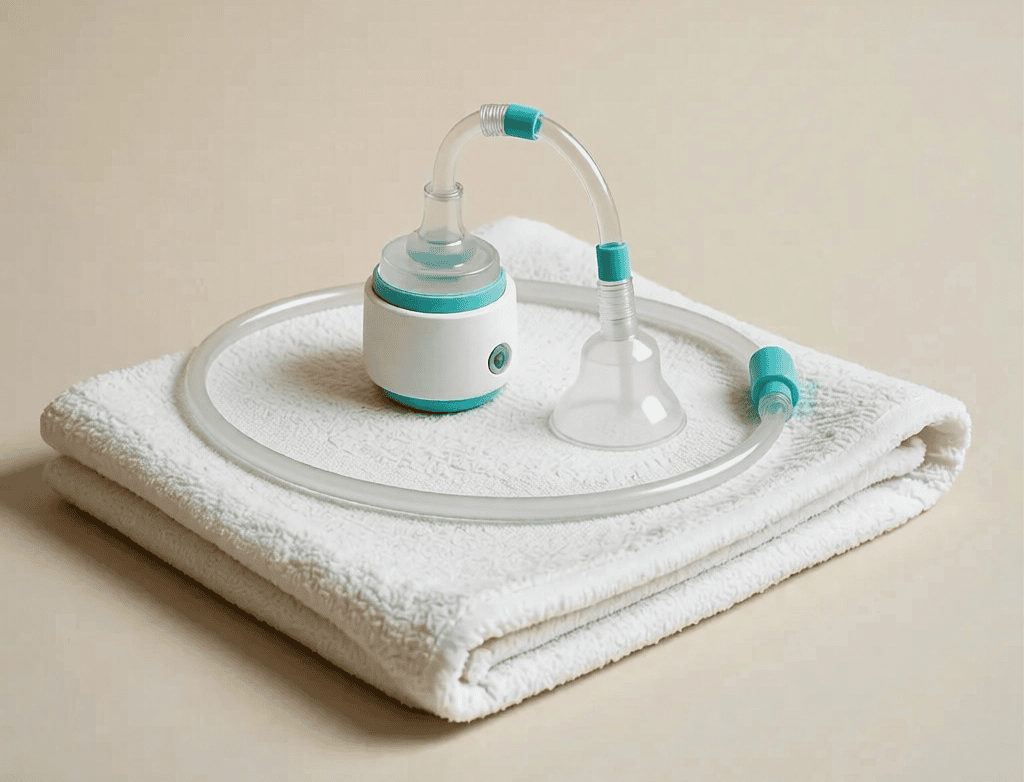
A vacuum device creates suction around tissue, drawing in blood and producing engorgement. A larger appearance immediately afterward can reflect that temporary effect.
Mayo Clinic’s overview of enlargement products explains that penile pumps can temporarily increase apparent size and that excessive use can damage tissue. This is information about penile anatomy; it is not a trial demonstrating permanent clitoral growth. [7]
Increased blood flow is not, by itself, proof of new lasting tissue growth. The available evidence does not establish a dependable permanent enlargement effect from pumping alone in transmasculine people.
Why might a surgeon recommend a pump?
The metoidioplasty series discussed above describes vacuum use before surgery and during postoperative care to address retraction. That specific surgical setting differs from independent pumping for nonsurgical enlargement. Follow your own surgeon’s instructions about whether, when, and how to use a device. [3]
Pumping Risks and Precautions
Vacuum devices can cause pain, bruising, and small areas of bleeding under the skin. Genital-pump research and instructions often concern penile erectile-dysfunction devices, sometimes with constriction rings; those instructions should not be copied directly onto different anatomy. [8]
- Use equipment suited to the intended anatomy. Look for controlled suction and a quick-release mechanism, and follow the device instructions.
- Stop for pain, numbness, coldness, discoloration, or skin injury. Increasing suction to chase a measurement can cause harm.
- Ask about individual risks first. Blood-thinning medicines and bleeding disorders can increase complications. [8]
- After surgery, follow your surgical team’s plan. Healing tissue needs an individual assessment before suction is introduced.
There is no well-established, evidence-based pressure-and-duration schedule for permanent transmasculine bottom growth. An online routine should not be treated as a validated protocol.
Seek urgent medical assessment for severe pain, persistent loss of sensation, dark or cold tissue, or significant swelling or bleeding after pumping.
How to Interpret Personal Experiences
Community reports can help people describe sensations, comfort, expectations, and questions that research has overlooked. They cannot reliably establish which treatment caused a size change.
When someone reports improvement, useful questions include:
- Were they still developing changes from testosterone?
- Were DHT, pumping, or other treatments started together?
- Was the measurement taken immediately after pumping or during arousal?
- Were the measuring method, angle, and conditions consistent?
- Did the change remain over time, and were adverse effects reported?
A before-and-after photograph alone cannot resolve those questions. Treat a personal account as one person’s experience, and be cautious when it becomes a promise attached to a product.
How Do These Options Compare With Testosterone and Surgery?
| Approach | Evidence and expected role | Main limitation |
|---|---|---|
| Prescribed testosterone | Established cause of bottom growth as part of broader masculinizing changes. | Individual size is unpredictable; effects are not limited to the genitals. |
| Topical DHT | Biological rationale and use in some surgical protocols. | Extra growth from DHT alone is not reliably quantified. |
| Vacuum pumping | Temporary engorgement; a role in some surgical care plans. | Permanent nonsurgical growth is not established. |
| Metoidioplasty | Reconstructs existing, hormonally enlarged clitoral tissue into a small penis. | Outcome depends on anatomy, technique, goals, and surgical risks. |
| Phalloplasty | Creates a penis using tissue from another area of the body. | More extensive reconstruction, often involving multiple stages. |
Testosterone: some effects persist, while others depend on continued treatment
Bottom growth is generally considered irreversible. That does not mean every effect of testosterone is permanent: body composition and other hormone-dependent changes may shift after treatment stops. Taking more testosterone than prescribed is not a reliable way to obtain extra growth and can increase health risks. [9]
Surgery changes structure and function
Metoidioplasty and phalloplasty involve different reconstruction techniques. Options such as urethral lengthening, scrotoplasty, and implants depend on the procedure and personal goals. Neither surgery guarantees a particular functional outcome. [11]
Discuss recovery, sensation, donor-site considerations, urinary complications, and possible additional procedures with a qualified surgical team. These are different decisions from trying to increase hormone-related growth. [12]

Questions to Ask a Clinician
Bring your goals into the conversation directly. Wanting more growth, wanting to protect your hairline, and wanting to preserve sensation can all be legitimate priorities.
- What is a realistic expectation given my anatomy and current treatment?
- What evidence supports the approach you are suggesting?
- If you recommend a cream or gel, what hormone and base does it contain?
- What effects elsewhere in my body or transfer risks should I understand?
- Could my other medications affect the decision?
- How will we assess benefit, monitor problems, and decide when to stop?
- If I am considering metoidioplasty, should my surgeon guide any DHT or pump use?
You do not need to prove that your current growth is “enough.” You deserve clear information and care that takes your goals seriously.
Frequently Asked Questions
Does topical DHT guarantee more bottom growth?
No. Clinical use and biological plausibility do not establish a predictable individual result. Research has not adequately quantified its additional benefit over existing testosterone treatment. [2]
Does the 2021 review prove DHT adds 2 cm?
No. That figure refers to testosterone-related enlargement, not a demonstrated extra 2 cm from topical DHT. [1]
Can DHT give me only bottom growth without other changes?
That outcome cannot be promised. Genital application does not establish exclusively local action, and absorption and effects in this setting remain insufficiently studied. [2]
Can I apply my usual testosterone gel directly to my genitals?
Do not repurpose a product prescribed for another application site. Check the exact product instructions with your clinician or pharmacist; alcohol-containing gels may irritate sensitive tissue. DHT gel can also contain alcohol. [4], [5]
Does pumping permanently increase bottom growth?
Permanent enlargement from pumping alone is not established. Temporary engorgement is easier to demonstrate and can make immediate measurements misleading. [7]
Does a surgeon’s pump recommendation prove it works for everyone?
No. Preoperative preparation and postoperative management have specific goals. A combined surgical protocol cannot establish a general enlargement benefit from pumping alone. [3]
Will bottom growth disappear if I stop testosterone?
Clinical counseling treats it as irreversible. Do not start testosterone expecting genital growth to reverse after stopping. Other hormone-related effects can change. [9]
Do I need DHT or pumping before metoidioplasty?
Not every surgical team uses the same preparation plan. Ask your prospective surgeon what they recommend and why before buying a device or seeking an additional prescription.
Related FTM Resources
- Understanding FTM Bottom Growth — anatomy, timelines, measurements, sensitivity, and daily care.
- Testosterone resources for transmasculine people — explore related FTM hormone content.
- FTM Resources and Support — healthcare navigation and wider community support.
Sources and Further Reading
Reviews, commentaries, surgical case series, and medication information answer different questions. A source documenting a treatment’s use does not necessarily demonstrate that treatment’s independent effectiveness.
- Grimstad F, Boskey ER, Taghinia A, Estrada CR, Ganor O. (2021). The role of androgens in clitorophallus development and possible applications to transgender patients. Andrology, 9(6), 1719–1728. Full-text review (PDF).
- Goodridge JD. (2024). The importance of addressing the research gap in transmasculine individuals: pharmacological and research considerations. British Journal of Clinical Pharmacology, 90(10), 2398–2400. Commentary.
- Bordas N, Stojanovic B, Bizic M, Szanto A, Djordjevic ML. (2021). Metoidioplasty: Surgical Options and Outcomes in 813 Cases. Frontiers in Endocrinology, 12, 760284. Surgical case series.
- Great Ormond Street Hospital. Dihydrotestosterone (Andractim) 2.5% gel for topical application. Medication information for specialist pediatric treatment; not an adult bottom-growth protocol.
- French public medicines database / ANSM. ANDRACTIM, gel pour application locale. Official product information, including formulation and application precautions. French-language source.
- U.S. Food and Drug Administration. Dihydrotestosterone Gel: orphan-drug designation and approval record. Regulatory status for the listed micropenis indication.
- Mayo Clinic. Penis-enlargement products: Do they work? Explains temporary pump effects and limits of enlargement claims; not a transmasculine growth study.
- Mayo Clinic. Penis pump. General device risks and precautions; anatomy and device configuration matter.
- UCSF Gender Affirming Health Program. (2025). Information on Testosterone Hormone Therapy. Patient education about effects, permanence, dosing expectations, and monitoring.
- Tominaga Y and colleagues. (2025). The safety and efficacy of finasteride for transgender men with androgenetic alopecia: a case series. Journal of Medical Case Reports, 19, 468. Three participants; not a bottom-growth trial.
- American Society of Plastic Surgeons. Masculinizing Genital Surgery: Procedure Steps. Overview of metoidioplasty and phalloplasty.
- Mayo Clinic. Masculinizing surgery. Procedure options and surgical considerations.
Additional context from the supplied reading
- FOLX Health: Testosterone HRT and Bottom Growth — clinical education and patient-experience context; discussion of an option should not be read as proof of permanent enlargement.
- Defreyne and colleagues: Gender-affirming hormonal therapy for transgender and gender-diverse people—A narrative review — broader hormone-therapy background, rather than a trial of topical DHT for growth.
- TransGuys: DHT for Transgender Men — community and historical context; not controlled evidence of effectiveness or safety.